

Establishing Productive Routines: How Consistent Habits Boost Your Performance Long-Term
Learn how to build productive routines through small, regular habits. Proven habit-formation techniques, practical morning and evening routines, and practical tips to prevent relapse—for sustained high performance.
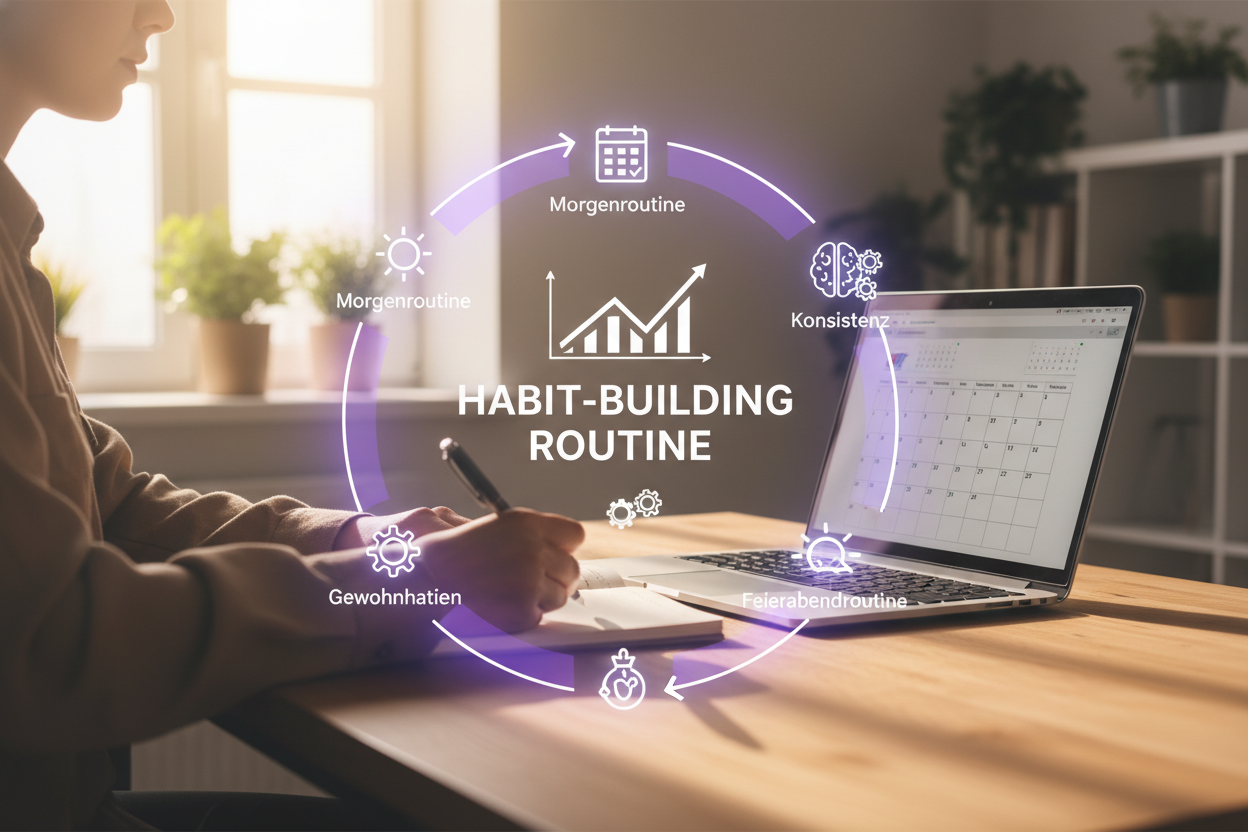

Why Routines Are the Key to Lasting Productivity
Every day brings new challenges, distractions, and decisions. Without a structured routine, you quickly lose track and waste mental energy on things that could be automated. Productive routines aren't rigid or boring – they're your foundation for success.
When you establish a routine, you create predictability in your daily life. Your brain doesn't have to constantly decide when to work, when to focus, or when to rest. This automation frees up enormous mental resources that you can use for more important, creative tasks.
Studies show that it takes an average of 66 days for a habit to become second nature. That sounds like a long time – but it's actually a manageable investment for a life with more focus, energy, and success.
The Science Behind Habit Formation: How Habits Develop
To successfully build productive routines, it helps to understand how habits work. The so-called Habit Loop Model consists of three components:
- Cue: A signal that triggers the habit – such as your alarm clock in the morning or opening your calendar.
- Routine: The actual action – your morning exercises, your work blocks, or your breaks.
- Reward: The positive feeling you experience afterward – a sense of accomplishment, relaxation, or a checkmark on your to-do list.
The clearer these three elements are, the easier it becomes for your brain to automate the habit. A practical example: The cue is your alarm at 6 a.m., the routine is a 20-minute morning meditation, and the reward is the calm feeling you start your day with.
Important: Start small. Many people fail because they're too ambitious. A new routine shouldn't take more than 10-15 minutes per day until it's automated. Then you can expand it.
The Perfect Morning Routine: Your Foundation for the Day
The first hour after waking sets the tone for your entire day. A well-thought-out morning routine gives you clarity, energy, and mental preparation – before external demands come pouring in.
Structure of a Productive Morning Routine
A proven structure looks like this:
- Hydration (5 min): Drink a glass of water. This reactivates your body after the night.
- Movement (10-20 min): Light stretching, yoga, a short walk, or exercise. This increases your heart rate and alertness.
- Focus Work (20-30 min): Your most important task of the day. Use your highest mental capacity for what really matters.
- Daily Planning (10 min): Define your top 3 goals for the day. Tools like Planpilot help you prioritize tasks and use timeboxing so you know how much time you have for each task.
This routine takes about 45-75 minutes total and demonstrably transforms your productivity. The key: Start tomorrow. Not sometime, but specifically tomorrow morning.
Why Morning Routines Are So Powerful
In the morning, you have maximum willpower and focus. Your cortisol levels are high, your brain is well-rested. When you use this time for your most important tasks, you often accomplish in 2-3 hours in the morning what takes 8 hours later in the day. Take advantage of this biological edge.
The Evening Routine: Switching Off and Recovering
While the morning routine prepares you, the evening routine ensures you can mentally switch off. Without clear boundaries between work and leisure, you'll burn out – no matter how productive you were during the day.
Building an Effective Evening Routine
Start 30-60 minutes before your planned end of workday:
- Tidying Up (10 min): Organize your workspace. This signals to your brain that work is done.
- Reflection (10 min): Write down what you accomplished today. This gives you a sense of achievement and helps you identify gaps for tomorrow.
- Switching Off (20-40 min): Read, take a walk, listen to music, or spend time with family. Important: No phone, no emails, no work.
This routine creates psychological boundaries. Your brain learns: After 6 p.m., work time is over. This not only improves your quality of life but also your focus the next day, because you're truly well-rested.
Practical Tips: How to Maintain Your Routine During Stressful Periods
Building routines is one thing – maintaining them when life gets chaotic is another. Here are proven strategies:
1. Apply the 80/20 Rule
Can't get through your complete routine? Then do at least the 20 percent that brings 80 percent of the results. In your morning routine, that could be: drink water + 10 minutes of movement + 5 minutes of daily planning. That takes 15 minutes and keeps you on track.
2. Use Habit Stacking
Link new habits to existing ones. Example: "After my morning coffee, I do 10 minutes of stretching." Coffee is already a routine – you simply attach the stretching to it. This reduces the mental hurdle.
3. Visual Tracker
A simple calendar on the wall where you check off each day you complete your routine works wonders. Psychologically, your brain wants to keep this chain unbroken – after 2-3 weeks it becomes a habit.
4. Build in Flexibility
Routines aren't rigid. If you're sick or facing a crisis, adjust your routine instead of ignoring it completely. This prevents you from having to start from scratch.
5. Use Digital Support
Apps like Planpilot can help you structure and track your routines. By entering your routines in a digital calendar and blocking out time slots, you increase the likelihood of actually following through. Timeboxing makes your routines concrete and measurable.
Common Mistakes – and How to Avoid Them
Many people fail at establishing routines for the same reasons:
- Too Much at Once: Starting five new habits simultaneously is doomed to fail. Begin with one, maximum two.
- No Clear Reward: Without a tangible reward, your brain won't automate the routine. Define specifically what you do after the routine or how you reward yourself.
- Unrealistic Expectations: You don't have to be perfect. 70 percent consistency over 66 days beats 100 percent for 2 weeks.
- No Adjustment: If a routine isn't working, change it. Maybe morning meditation isn't for you – try a short walk instead.
Your Next Steps: How to Start Today
Theory is nice – but action is what counts. Here's a concrete plan:
- Choose a Routine: Morning or evening? Decide on one.
- Define the Duration: Maximum 15 minutes to start.
- Set a Trigger: Alarm, coffee, start of work – what's your signal?
- Write Down the Routine: Concrete steps, not vague goals. "Do exercise" is too vague. "10 minutes of stretching after drinking water" is concrete.
- Start Tomorrow: Not next week. Tomorrow. And stick with it for 66 days.
After two months, you'll notice that your routine feels natural. You're not doing it because you have to – you're doing it because it's part of who you are. That's when real productivity happens.
Conclusion: Small Routines, Big Impact
Productive routines aren't a limitation – they're your freedom. They give you structure so you can focus on what really matters. With consistent habits, clear triggers, and realistic expectations, you'll become more productive, focused, and satisfied in the long run.
The beginning is always the hardest part. But you can do this. Start tomorrow with a single routine, stick with it for 66 days, and watch how it transforms your life. Your future, more productive self will thank you.
Bereit, deinen Tag zu planen?
Probiere die Zeitbox-Methode mit Planpilot aus — kostenlos und in 5 Minuten einsatzbereit.
Jetzt kostenlos starten →
Comments
Leave a comment
Please follow our . Comments are published after review.